
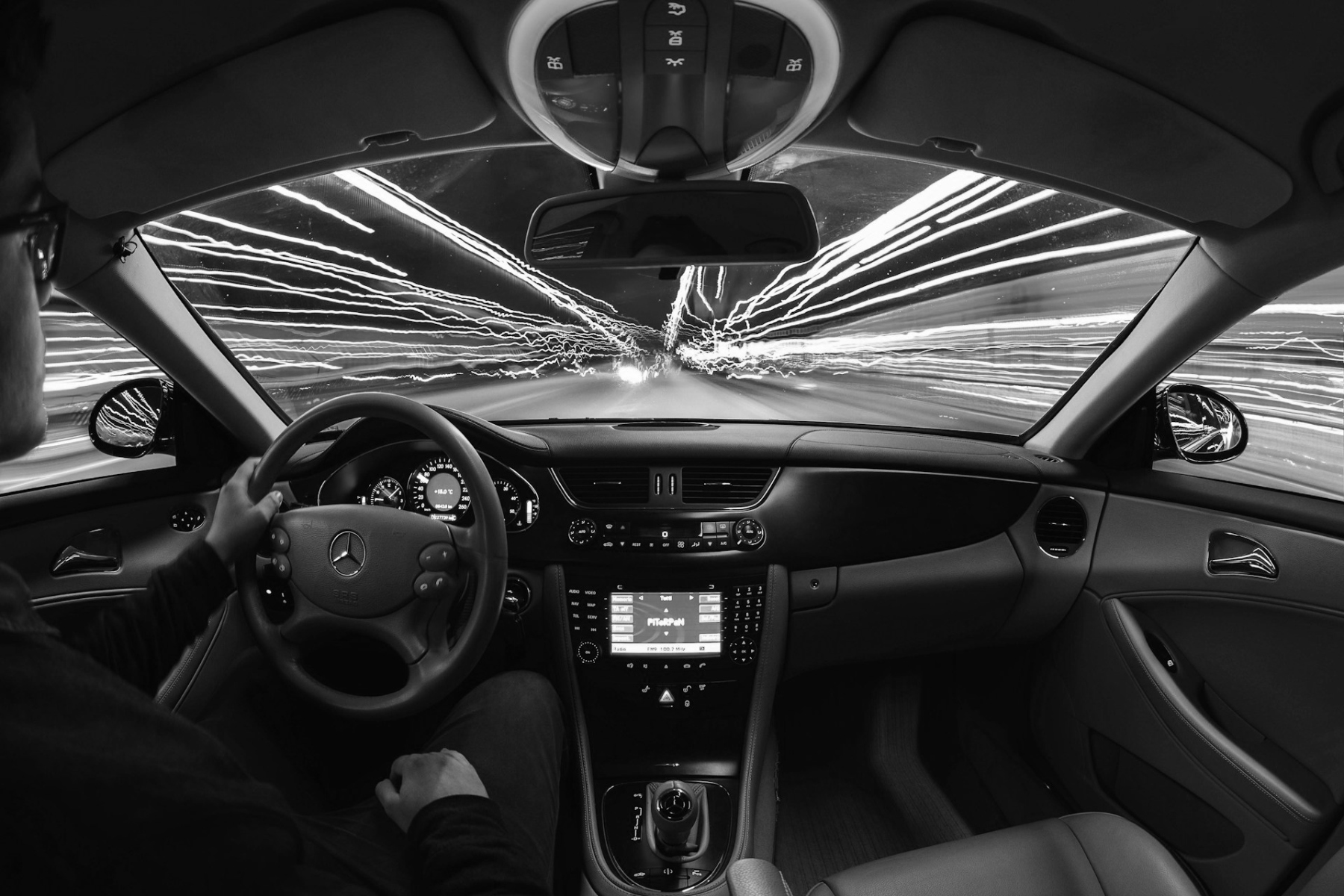
In-car tech has come a long way from simple infotainment systems and dashboard clusters. Today, drivers can retrofit vehicles with heads-up displays (HUDs), dash-mounted tablets or even AR overlays to enhance navigation and safety. But these upgrades still rely on discrete screens that divide a driver’s attention. The next step in automotive evolution seeks to merge the digital and physical worlds entirely — through a smart windshield. But what will that do?
From AR-HUD to a True Smart Windshield
Augmented reality HUDs project helpful overlays — lane markings, speed limits or navigation arrows — onto a small portion of the windshield. Systems like those in the Mercedes-Benz S-Class or BMW IX employ a fixed projection zone that visually aligns virtual graphics with real-world features. Yet, this is still a halfway measure.
A true smart windshield will make the entire glass a dynamic, high-resolution interface capable of rendering contextual information anywhere in the driver’s view. Instead of projecting from a box beneath the windshield, the single display would be integrated into the windshield itself, using transparent micro-LED or laser-based projection technology.
This shift demands centimeter-level spatial accuracy and low-latency rendering — benchmarks far beyond what most consumer HUDs achieve today.
Key Features of the Future Smart Windshield
When it happens, this is likely what it will look like.
Dynamic Navigation
Finding your way about will no longer be confined to floating arrows or dashboard maps. The windshield will render turn-by-turn guidance that appears “painted” on the asphalt itself, with lane-level precision derived from real-time sensor fusion. Using LiDAR, camera arrays and GPS correction, the system can identify the optimal path and visually integrate it.
Proactive Hazard Identification
If a pedestrian steps off the curb or a cyclist enters the blind spot, the windshield could subtly highlight their presence with color-coded contours or motion cues. Unlike today’s audible or haptic warnings, this visual feedback would be immediate, spatially anchored and non-intrusive. The challenge will be balancing visibility without overwhelming the driver — a problem human-factors engineers are already prototyping solutions for through adaptive display algorithms.
Vehicle-to-Everything (V2X) Integration
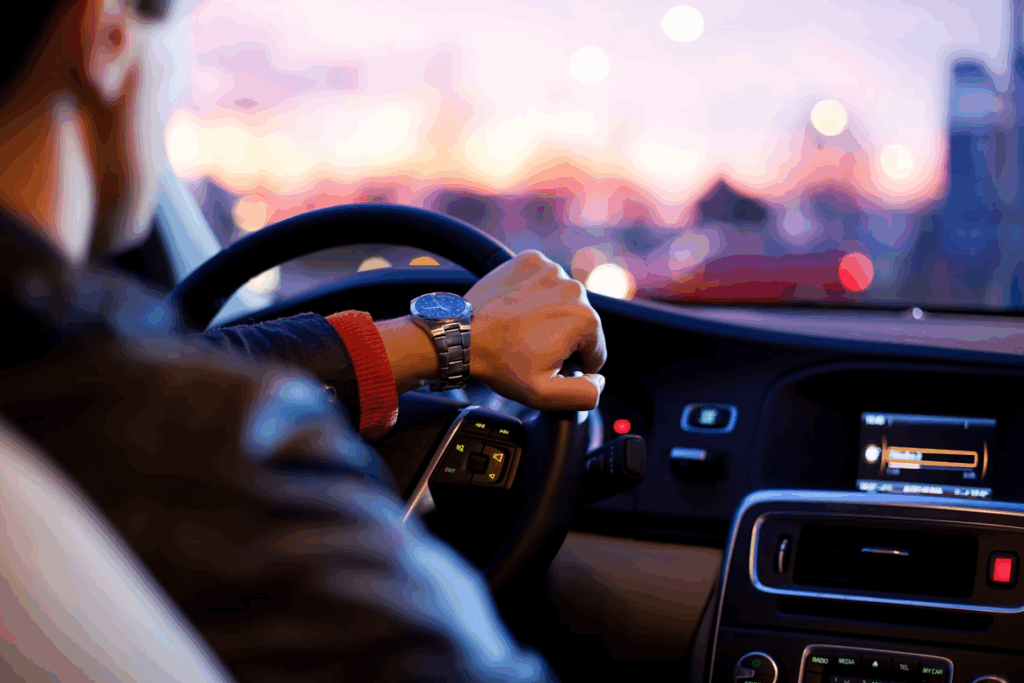
Smart windshields will also serve as the primary interface for V2X integration, synthesizing data from surrounding vehicles, infrastructure and even road sensors. Imagine driving through an intersection as your windshield indicates that the light ahead will turn red in three seconds — or receiving a subtle visual clue that a car two vehicles ahead is hard-braking.
By using telemetry from other vehicles, the system may visualize invisible hazards before they appear to the driver. Highway merges, emergency vehicles or black ice zones could be preemptively displayed as glowing icons or color gradients on the road surface. This could create a collaborative driving environment where every vehicle contributes to the collective awareness.
A Bridge to Autonomous Driving
Although Level 3 self-driving cars are gradually being granted approval in the U.S., the path toward Level 4 and 5 is difficult, both technically and psychologically. Nevertheless, a future of automated cars isn’t going away — and smart windshields could be key to the next step. At Level 4, the human driver still has the option to manually take control if desired. By displaying what the sensors are “seeing”, the car can identify its intentions to the driver, building trust and ensuring a safe handover if human intervention is required.
On-Demand Privacy and Glare Reduction
Beyond AR visualization, the smart windshield will incorporate adaptive glass technologies. Using electrochromic or suspended-particle devices, the windshield photocells will automatically adjust transparency based on driver preference or lighting conditions. When parked, it might transition to full opacity for privacy or enhanced thermal insulation — a feature already emerging in high-EV concept vehicles.
Overcoming Hurdles to Implementation
The most immediate hurdle is information overload — ensuring this interface remains intuitive and does not flood the driver with irrelevant data, undermining safety. Automotive UX designers are experimenting with AI-driven algorithms that prioritize visuals based on driving conditions and driver behavior.
Equally demanding is the processing requirement. Rendering spatially accurate AR graphics in real time means handling terabytes of sensor input per minute, requiring specialized GPUS.
Then there are safety and regulatory challenges. A display integrated into the windshield must still meet optical clarity standards, withstand temperature extremes and avoid introducing distractions. Testing protocols for AR systems in vehicles are still evolving, with ISO and UNECE working toward standardization frameworks that define acceptable guidelines.
Bringing the Future Into View
The smart windshield represents a fundamental shift from a simple piece of glass to an active, integrated safety system. By delivering critical information without causing distraction, the goal is to make driving safer and more intuitive. Significant engineering and regulatory challenges remain, but once those are resolved, the smart windshield is poised to completely redefine the relationship between the driver, the car and the road.