

Every year moves people closer to a reality where roads are full of cars driving themselves. Today, there are five levels of self-driving cars, with Level 1 being simple advanced driving assistance and Level 5 being fully autonomous.
Level 3 autonomous vehicles can handle all critical driving tasks. Although they’re becoming more prevalent, this type of self-driving car is still limited to specific geographical areas and conditions. Here’s a deep dive on the tech that makes them possible.
- Light Detection and Ranging
One crucial piece of technology that enables Level 3 autonomous vehicles to function is light detection and ranging (LiDAR). This equipment creates a 3D and 360-degree map of the vehicle’s surroundings in real time.
LiDAR is not only used in self-driving cars — it’s also in other sectors, including by scientists to examine the Earth’s surface and by developers designing civil engineering projects. For Level 3 autonomous cars, it is used to accurately predict distances and identify the shape of objects — a must for ensuring the safety of passengers and pedestrians.
- Cameras
A Level 3 autonomous car uses multiple high-resolution cameras to provide detailed visual data for perceiving the environment and making decisions. These perspectives allow the vehicle to identify and classify objects, such as other cars, pedestrians, road signs and traffic lights.
- Radars
Radar is used to complement cameras and LiDAR systems on Level 3 autonomous vehicles. It’s also crucial for keeping these self-driving cars running safely. One of the significant strengths of radar is its ability to measure velocity instantly and precisely. This is something that both LiDAR and cameras struggle with, due to the need to process multiple frames.
- Sensor Fusion
No single sensor is enough for a self-driving car to navigate through hazards on the road. That’s where sensor fusion technology comes in. This is the process of combining data from multiple sources, like radar, cameras and LiDAR, to create a single and highly accurate model of the environment. Research has shown that fusing data from multiple sensors enables a vehicle to perceive its surroundings in adverse weather conditions.
- Massive Data Processing
Fortune Business Insights projects that the global autonomous vehicle market will be worth around $13,632 billion by 2030. The ability to process massive amounts of data and advancements in that area will be a huge part of the industry’s future success. A self-driving vehicle often exceeds multiple gigabytes every minute of operation, which is processed and interpreted in real time for safe and effective navigation.
- Specialized Processors
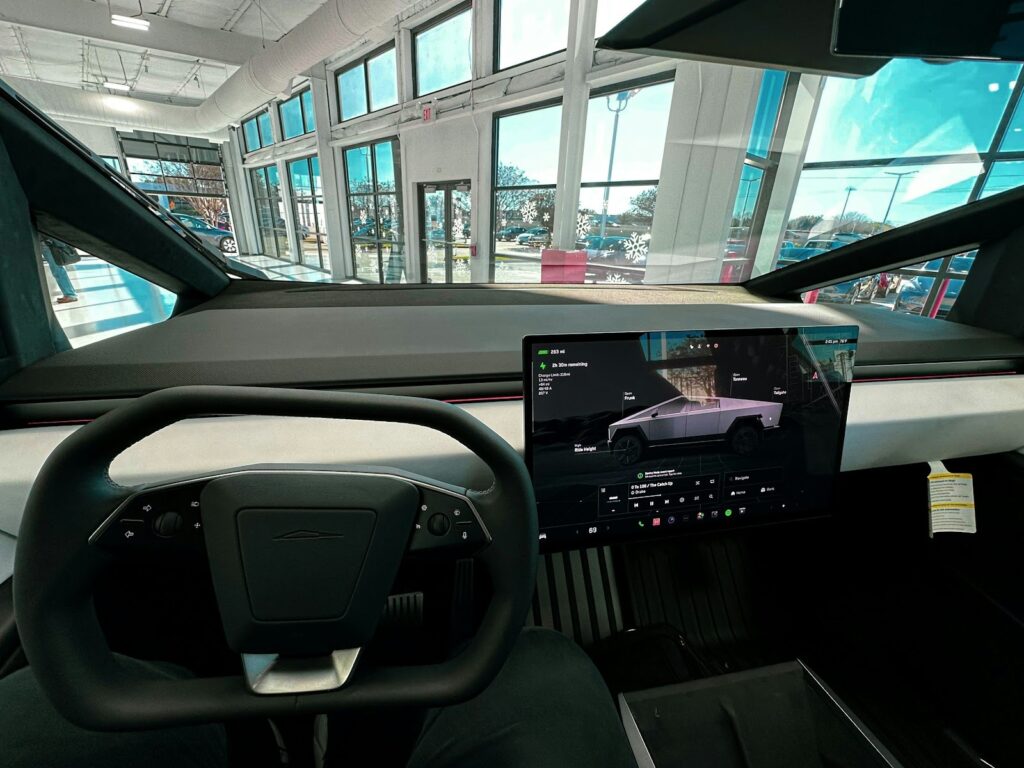
This mammoth amount of data is something even the strongest of gaming PC’s would struggle to handle. To make it all possible, Level 3 autonomous vehicles are equipped with powerful processors, which are like the brain of the operating system. These processing units are far from run-of-the-mill processors — they’re highly specialized systems tailored toward the demands of a self-driving car, with hefty graphics processing units and custom AI accelerators.
- Advanced GPS
Another piece of technology that enables self-driving cars is a complex, advanced GPS. Most vehicles on the market today have some level of GPS and connectivity between them. However, consumer-grade GPS is not accurate or reliable enough to power a Level 3 autonomous vehicle. That’s because most standard GPS products offer meter-level accuracy, whereas Level 3 cars require centimeter-level precision.
- Low-Latency Decision-Making Technologies
On the road, the ability to make split-second decisions when driving can be the difference between life and death. That’s why low-latency processing systems are crucial for making a Level 3 autonomous vehicle possible. In the future, you can expect to see a greater integration of LLM and AI models to enhance decision-making, enabling critical decision-making in milliseconds.
- High Definition Maps
Level 3 vehicles use high-definition maps that provide rich spatial information, which is necessary for safe navigation. They detail lane markings, road signs, curbs and road geometry. This tech also helps with localization, allowing the vehicle to pinpoint its position by comparing sensor data to the HD map. These maps update in real time through cellular networks, providing information on traffic, accidents and construction.
Level 3 Autonomy Is a Technological Triumph
Level 3 is a wonder of both science and technology, with a combination of advanced sensors, AI and high-definition maps. While there are regulations and practical challenges that lie ahead for widespread adoption, these vehicles demonstrate just how near a fully autonomous future is and the technology that’s powering the way.