
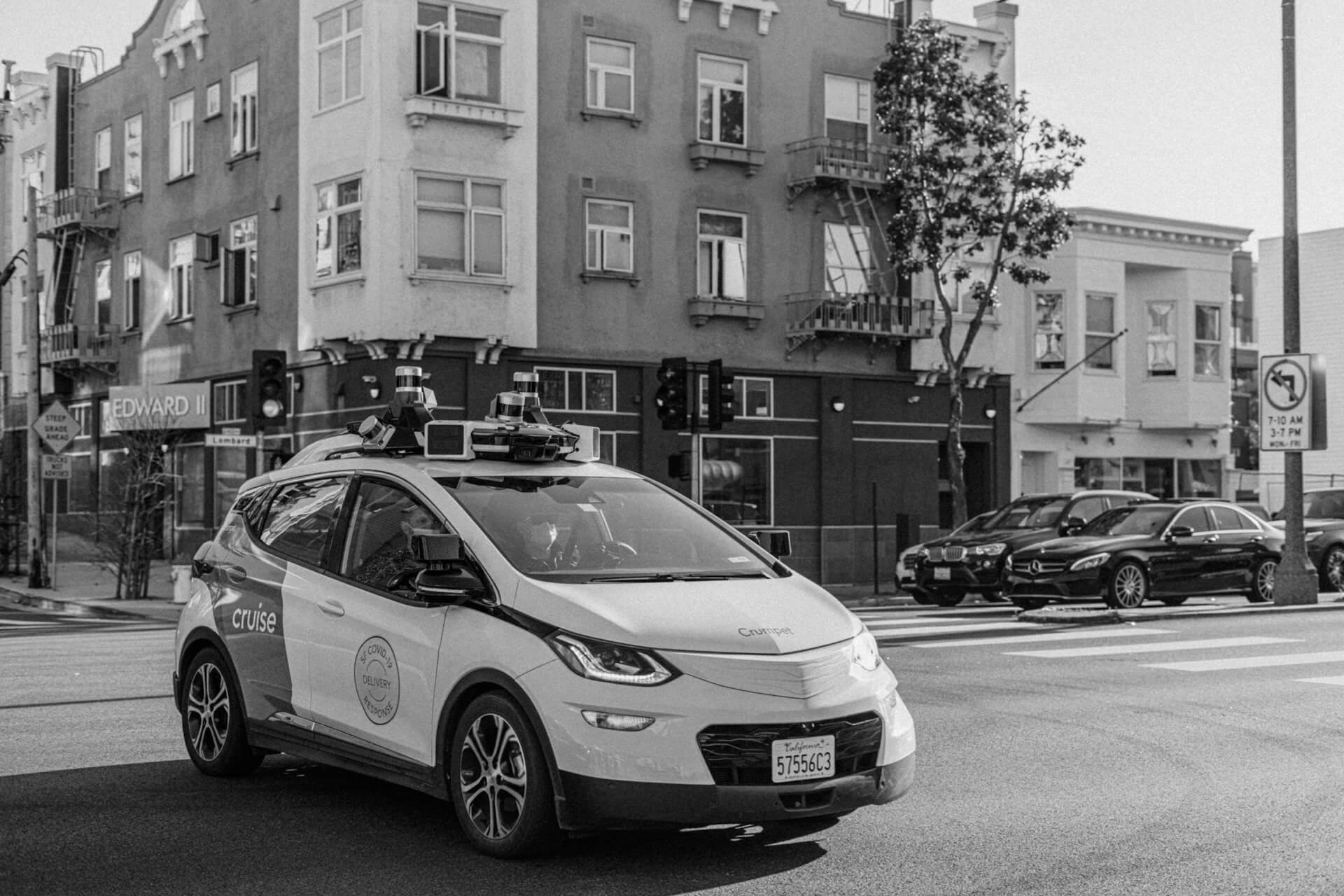
Autonomous vehicles (AVs) are transforming how we travel, relying on machine learning to perceive, interpret and respond to their environment. Sensors like cameras, LiDAR and radar provide critical data for safe navigation. Advanced algorithms process this information to detect objects and assess risks. Machine learning ultimately enables vehicles to make decisions and drive with minimal human input.
Seeing and Interpreting the Surrounding Environment
Researchers have gained significant momentum in autonomous driving over the past few decades, profoundly disrupting the automotive industry. Driver-related errors, including distracted driving and improper maneuvers, account for approximately 94% of accidents. Automating vehicles can significantly reduce many human errors, potentially saving thousands of lives. AVs enhance safety and provide mobility for individuals who are unable to drive, such as older adults or those with disabilities.
Additionally, automated driving enhances efficiency, reduces fuel consumption and minimizes the environmental impact of traditional driving. The transportation industry is responsible for 29% of the greenhouse gas (GHG) emissions in the United States. Efficient route planning and reduced traffic congestion are essential. These advanced trucks use predictive analytics and smart driving, enabling autonomous trucks to optimize fuel efficiency rather than focus on rapid acceleration.
Fusing Multiple Sensors for Accurate Perception
AVs use computer vision and machine learning, including deep CNNs, to detect and classify road objects. RGB cameras mimic human vision by processing red, green and blue wavelengths to identify vehicles, pedestrians, bicycles and obstacles. Similarly, CCTV footage can be analyzed frame by frame to detect and classify objects on the road.
Beyond cameras, AVs use LiDAR and radar to capture depth and motion, mapping the environment and tracking moving objects. GPS aids navigation by providing the location, speed and direction of each vehicle. This enables computer vision algorithms to integrate visual data with precise positioning, resulting in safer and more efficient driving.
Processing Perception Using Advanced Machine Learning Techniques
Sensor fusion combines data from multiple sensors to give AVs a more accurate and reliable view of their surroundings. Cameras capture detailed visuals, LiDAR generates precise 3D point clouds and radar measures range and velocity, even in poor weather conditions. Integrating these inputs offsets individual sensor limitations, ensuring effective perception.
Fusion occurs at multiple levels: early fusion merges raw data but may face alignment issues, mid-level fusion combines extracted features for stronger perception and late fusion integrates decisions from separate sensors for simplicity. Each approach strikes a balance between complexity, accuracy and synergy in autonomous vehicle perception. This process is vital for safer navigation, better object detection and smarter decision-making in complex traffic.
Making Driving Decisions Based on Processed Data
Perception is crucial for autonomous driving, as machine learning enables vehicles to accurately interpret and respond to their surroundings. The Simultaneous Segmentation and Detection Network (SSADNet) uses LiDAR point clouds to identify drivable areas and obstacles in real time, achieving 96.9% pixel-wise segmentation accuracy. By converting 3D LiDAR data into top-view images, SSADNet detects both moving and stationary objects, providing critical input for decision-making and trajectory planning.
Modern AVs enhance perception through multisensor integration. CNN-based multitask learning, Sparse Spatial Convolutional Neural Networks (SSCNN) and Sensor-Weighted Integration Field (SWIF) fuse LiDAR, camera and radar data. This integration enables AVs to navigate complex urban traffic effectively. Techniques such as 3D vehicle recognition using monocular vision, SVM-CNN for addressing class imbalance and RANSAC enhance object detection, distance estimation and risk assessment. Vehicles like Boss demonstrate how fused sensor data creates comprehensive and reliable world models for safe autonomous driving.
Making Driving Decisions with Machine Learning
AVs use advanced decision-making systems to navigate complex environments safely and efficiently. They create internal maps of surroundings, from road layouts to traffic participants and use this information to plan trajectories, avoid obstacles and interact with other vehicles while following traffic rules. Decision-making integrates perception, planning and control across Assisted, Automated and fully Autonomous modes.
AV decision-making architectures fall into two main types — Modular and End-to-End. Modular designs separate tasks like route planning, behavior selection, motion planning and control, making them interpretable and easier to debug. End-to-End systems map sensory inputs directly to driving actions via machine learning, simplifying the pipeline but reducing transparency. Hybrid approaches combine the benefits of both.
Recent research focuses on learning-based strategies, including reinforcement and imitation learning, enabling AVs to adapt to dynamic scenarios and exhibit humanlike behaviors beyond preset rules. These methods excel in uncertainty handling, risk assessment and complex traffic situations. Ongoing studies continue refining models for improved safety, efficiency and real-world generalization.
Teaching Cars to See, Think and Drive Safely
Machine learning powers AVs, enabling them to perceive, interpret and respond to complex traffic situations. Sensor fusion and advanced perception improve accuracy and safety, while decision-making models guide efficient, hazard-free navigation. Together, these systems are shaping smarter, safer transportation.