Author: Oscar Collins

  • These Are 5 Future Concept Cars I Had a Hard Time Wrapping My Head Around

    These Are 5 Future Concept Cars I Had a Hard Time Wrapping My Head Around

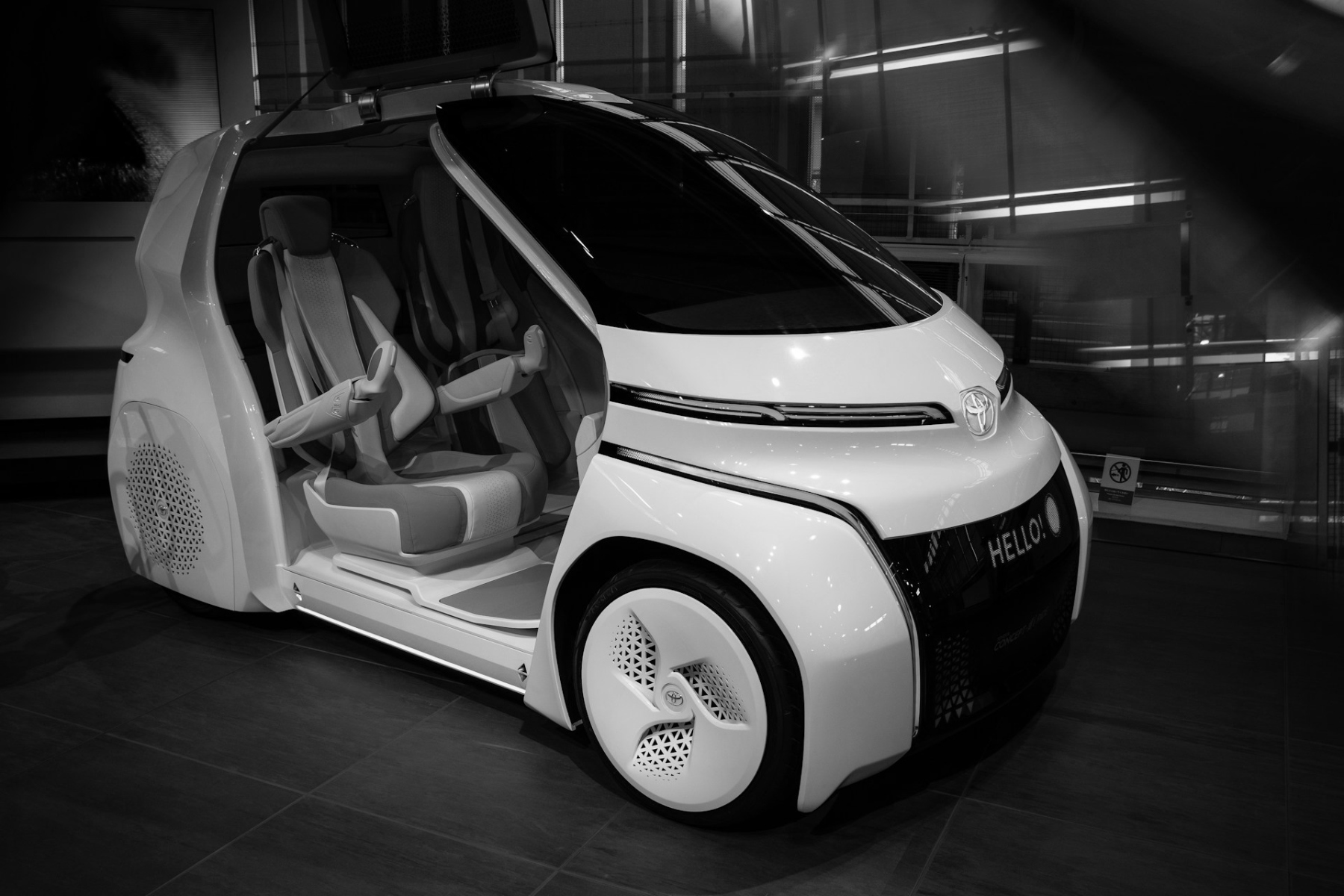
    Have you ever seen a futuristic concept car that was so out-there you had to do a double-take? I sure have. For car enthusiasts, there’s nothing more exciting than imagining the new frontiers automotives can go. Concept cars aren’t just about predicting the future — they’re also about redefining what’s possible. Here are a few of the concept cars I have a hard time wrapping my head around. 

    1. Citroen Karin

    The Citreon Karin is certainly a car I’d spot on the street. This striking future concept car debuted in the 1980s and is renowned for its distinctive pyramid-like design. It features sharp angles, a flat roof and an exterior of flush glass panels. 

    The roof of this car is surprisingly small, around the size of an A3 sheet of paper, due to its unique pyramid shape. It also features a four-cylinder engine and is equipped with front-wheel drive and hydropneumatic suspension. It’s definitely a statement, but it loses marks on practicality due to having only one driver’s seat and two seats in the back. 

    2. Renault Racoon

    Ever wanted to own a car that can drive on both water and land? I sure have, and the Renault Racoon might be the closest thing to it. This future concept car, developed in 1992, was designed to be all-terrain with amphibious capabilities. Don’t let the car’s questionable aesthetic fool you — it is equipped with a twin-turbo B6 engine and all-wheel drive.

    This futuristic concept car was designed to be raised for increased ground clearance, and its body was accessed through a lifted canopy instead of traditional doors. The car was also equipped with cameras instead of mirrors and a satellite navigation system. Backup cameras are now required on all new U.S. vehicles under 10,000 pounds, but at the time, the idea was groundbreaking.

    3. Isuzu Nagisa 

    I’ve added not one, but two amphibious cars on this list. Move over, Renault Racoon, the Isuzu Nagisa is a worthy competitor. This wild future concept car was designed just one year earlier, in 1991, and was first unveiled at the Tokyo Motor Show. Like the Raccoon, it was designed to go both on land and in water, but it’s powered by a 3.2–liter V6 engine.

    4. Ford Nucleon

    The Ford Nucleon was a concept car designed in the 1957s, envisioning what cars would look like in a nuclear-powered future, and it’s definitely a concept I struggle to grasp. The car was designed to run on a miniature nuclear reactor in the rear, which would generate steam to power turbines. 

    It was designed with the hope that it would have a 5,000-mile range before needing a replacement uranium capsule, a massive improvement over the 25 miles per gallon that the average car in the U.S. gets today. Sadly, the concept relied on the assumption that nuclear technology could be safely and reliably miniaturized, which proved to be impossible during the 1950s. For this reason, the Ford Nucleon was never produced beyond a ⅜ scale model. 

    5. BMW GINA

    Color-changing cars are, in fact, a reality. In 2022, BMW showcased a novel color paint technology at the Consumer Electronics Show in Las Vegas. A shapeshifting car, though? That’s something I had never imagined — until I discovered the BMW GINA. 

    The GINA is a shape-shifting future concept car, made from a durable fabric skin that stretches over an internal skeleton of wires and carbon fiber. This clever technology enables the car’s exterior panels and elements to move and adapt, altering the car’s shape to suit various needs. 

    If that wasn’t enough, the structure the skin is wrapped around can also move. The hood, for instance, can be split down the middle to reveal the impressive V8 engine. The interior can also move — the steering wheel and instrument panel are adjustable, and the headrests can rise automatically whenever the driver gets behind the wheel. 

    From Head-Scratching to Ground-Breaking Cars 
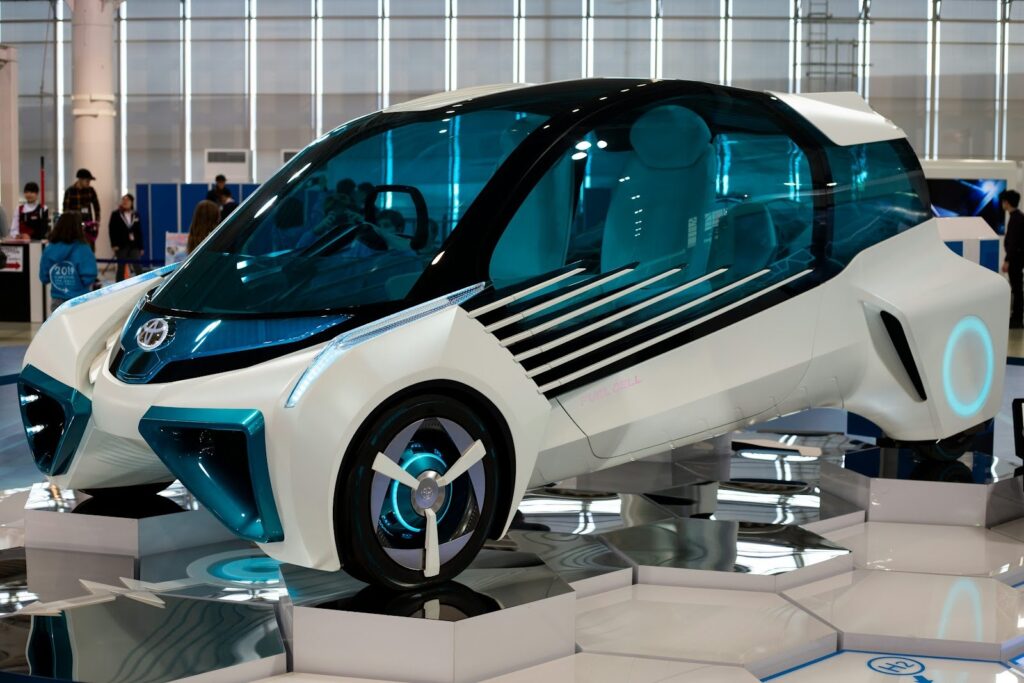
    These future concept cars are examples of what happens when automotive designers dare to break conventions. Whether it’s radical changes in the shape of a car and its aerodynamics, or outright bizarre ideas, each of these models challenges the assumption of what a car should be. Ultimately, future concept cars demonstrate that ideas that may seem bizarre at first can become reality when people are willing to push boundaries.
  • 5 Future Mobility Concepts That Are Changing Transportation

    5 Future Mobility Concepts That Are Changing Transportation

    Innovation in transportation has been nonstop since the days of horses and buggies. The economic incentives of reducing commute time, preventing accidents and streamlining fulfillment incentivize ingenuity, giving birth to future mobility concepts. Additionally, climate change has accelerated the adoption of electrification. Where will society go from here? These five concepts provide a glimpse of the future of mobility.

    1. Vehicle to Everything (V2X)

    V2X enables automobiles to communicate with each other, road infrastructure elements, pedestrians, network services and connected devices. It has a long list of use cases, including reducing the risk of collision, optimizing traffic flow and accessing smart home systems.

    This technology has been under discussion for a long time, and it’s finally ripe for mainstream adoption. In 2024, Volkwasgen launched a suite of V2X capabilities, like notifying oncoming vehicles when the car is disabled and receiving warnings of potential hazards ahead.

    1. Autonomous Driving

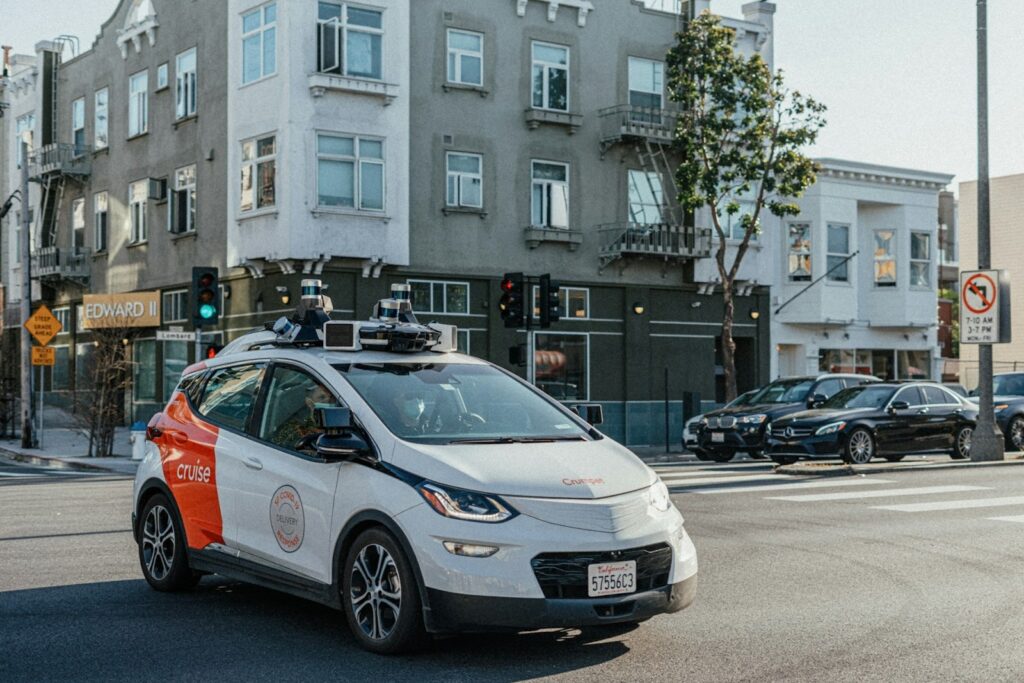
    Sam Abuelsamid, an automotive leader and vice president of market research at Telemetry, projects that over 16 million Level 4 automobiles will enter the market annually, which means that fully self-driving vehicles may not become a reality until at least the second half of the next decade.

    Nevertheless, the futuristic concept of fully automated driving is on the horizon. The full-scale deployment of Level 5 vehicles will empower the transportation industry’s workforce, creating new opportunities for drivers to transition into remote operators or provide customer support.

    1. Floating Warehouses

    Amazon and Walmart are in a race to realize aerial fulfillment centers. The two applied for patents for aircraft meant to hover above population centers, house inventory and provide launching bays for delivery drones.

    These retail giants have been quiet about any updates on their floating warehouses for years. If and when the infrastructure is ready, expect to receive your orders within minutes.

    1. Urban Air Mobility

    The value proposition of air taxis is clear — they avoid ground congestion and help people reach their destination more quickly. The leading concept for urban air mobility involves electric vertical takeoff and landing aircraft, which operate like helicopters but with multiple electric rotors.

    The operational frameworks for urban air mobility in various countries are at different stages of development. Integrating the aircraft with the existing infrastructure and learning to navigate complex air traffic in built environments are also unsolved challenges. One of the frontrunners is the United Arab Emirates, which conducted real-world simulations and pilot tests in 2025 to create a blueprint other nations can emulate.

    1. Hyperloop

    The theoretical hyperloop system uses magnetic levitation and propulsion to enable pods to travel through a near-vacuum environment inside a network of low-pressure tubes. Elon Musk proposed this mobility concept in 2013 and published a white paper for public consumption, allowing universities and transportation companies to build on the idea.

    The technology remains experimental. Although the hyperloop hasn’t been commercially viable due to its cost and complexity, among other factors, many haven’t given up on it. In 2024, a Swiss consortium constructed a 1/12-scale model and a circular test track to validate its feasibility. The team’s hyperloop system traveled 7.3 miles at a speed of 25.3 mph, translating to a journey from San Francisco to Sacramento, California, at speeds of up to 303.4 mph.

    A New Blueprint for Mobility 

    Many of these innovative mobility concepts are likely to emerge in the future, and some are already present in various forms. Only time will tell when all of them materialize as envisioned, but you can bet the experts behind them are working tirelessly to make them work sooner rather than later.

  • Ethical Questions We Have to Ask With Fully Autonomous Vehicles

    Ethical Questions We Have to Ask With Fully Autonomous Vehicles

    Autonomous vehicle ethics is a topic of interest to not only auto tech enthusiasts, but also philosophers, policymakers and regulators. Although there are solid cases for replacing human drivers with machines, there are also strong arguments against allowing driverless automobiles to take charge of the transportation sector.

    As carmakers continuously make inroads into Level 5 of driving automation and usher in the age of fully self-driving vehicles, the world must ask and answer these six ethical questions sooner rather than later.

    1. Should Discrimination Be a Primary Consideration When Programming Fully Autonomous Vehicles?

    Level 5 vehicles use multiple algorithms to perceive elements on the road, predict probabilities and make maneuvering decisions. While these sets of instructions enable them to operate independently, fundamentally flawed code can make them prone to algorithmic bias.

    Decisions arising from algorithmic bias can lead to undesirable outcomes disproportionately affecting specific groups of people. One of the most pressing ethical challenges carmakers face is programming fully autonomous vehicles to treat each individual fairly and to make the right call on the road every single time.

    2. How Should Driverless Cars and Trucks Make High-Stakes Decisions?

    High-stakes decisions made by experienced human drivers in a split second can already be controversial. You can imagine how the public would react if futuristic machines developed by fallible humans were to make decisions in potentially life-or-death situations.

    Many philosophers argue that autonomous vehicles should adopt either utilitarianism or deontology in the event of an unavoidable crash. The former aims to cause the least harm to the greatest number of people, while the latter focuses on duties and rules rather than making morality-based decisions.

    3. Should Automakers Be Liable for Accidents Involving Self-Driving Cars?

    When a driverless car crashes, the traditional model of driver liability becomes obsolete, creating a complex legal and ethical challenge. Which party should take the blame when a fully autonomous vehicle hits a person or damages property? Fault no longer falls on a single person but could be distributed among the automaker for hardware flaws, the software developer for AI errors, the owner for improper maintenance or even a third-party supplier for a faulty sensor. 

    Resolving these disputes requires new solutions. Policymakers and regulators should consult diverse stakeholders to ensure comprehensive laws on self-driving vehicles cover all relevant aspects.

    4. How Should Level 5 Automobiles Collect and Use Personal Data?

    Data privacy is closely tied to the ethics of autonomous vehicles. Driverless automobiles rely on vast amounts of sensitive information to operate safely, personalize settings and navigate road networks efficiently.

    The problem is that the companies controlling the advanced technologies that fully autonomous vehicles use to collect data, such as ultrasonic sensors, cameras and lidar, could monetize sensitive information, violating individuals’ privacy. Authorities should clarify who owns which types of data and how they are permitted to use it.

    5. Will Fully Autonomous Vehicles Exacerbate Social Isolation?

    According to the United States Centers for Disease Control and Prevention, an estimated one in three adults experiences loneliness. The advent of fully autonomous vehicles could reduce opportunities for chance encounters with fellow human beings, exacerbating the epidemic of loneliness and social isolation.

    However, driverless vehicles could also reduce isolation. For older adults who no longer drive or individuals with disabilities that prevent them from driving, an autonomous vehicle allows them to visit family, attend appointments and participate in community events. Therefore, the ethical question is whether the loss of chance encounters outweighs new opportunities for isolated individuals to connect. 

    6. Will Driverless Automobiles Increase Unemployment?

    The transportation sector employs millions of people. In the U.S., employment in truck transportation was 1,525,400 in May 2025. That number rises when you factor in delivery, ride-sharing, taxi and bus drivers.

    The adoption of self-driving automobiles could render many of these jobs obsolete. Considering that driver wages and benefits, along with fuel, account for approximately 65% of the total cost of operating a truck, fleet leaders have financial incentives to invest in driverless vehicles. This move could eliminate human transportation roles and leave millions jobless, with dire economic and social consequences.

    A Crossroads of Morality and Machine 

    Self-driving cars, trucks and buses have unquestionable merits but also present consequential effects on society. The ethical discussions about the moral impact of fully autonomous vehicles on people’s lives may never reach a consensus. Nevertheless, these conversations are worth having to anticipate the full extent of automated driving’s disruption before driverless automobiles go mainstream.

  • What Can You Expect From Tomorrow’s Augmented Reality Dashboard?

    What Can You Expect From Tomorrow’s Augmented Reality Dashboard?

    Augmented reality (AR) in automobiles may sound futuristic, but the technology’s conception predates the birth of the oldest millennials. After graduating from military use, heads-up displays (HUDs) and other AR precursors found themselves in civilian vehicles decades ago. The 21st century saw many car manufacturers begin exploring the tech’s use cases, leading to innovations, such as BMW’s digital showrooms and Land Rover’s transparent hood.

    Although only some automobile models have an augmented reality dashboard, the automotive industry has been busy embracing immersive technology for various applications. Discover how carmakers have integrated AR dashboards into their operations so far and the future uses in the pipeline.

    Augmented Reality Dashboard — What’s Currently Possible

    Most AR-driven auto tech in action happens behind the scenes, but more motorists are getting a taste of it. Here are eight prominent ways industry players have adopted augmented reality.

    1. Prototyping

    Auto designers and engineers these days build and overlay full-scale virtual car models on shared, realistic environments. This capability reduces the need for expensive, physical prototypes and enables professionals to modify designs and create iterations more easily.

    1. Worker Training

    Mixed-reality glasses help new hires at car production plants better understand the complex anatomy of automobiles. Ford teaches new workers in its Michigan production facilities about wiring using Microsoft HoloLens 2 devices, guiding trainees with holographic manuals hovering in mid-air.

    1. Assembly Line Optimization

    Augmented reality dashboards help assembly line technicians and engineers assemble dozens of parts correctly and in the correct order. AR software developers break down detailed guides with corresponding technical drawings and put the information onto smart glasses. The result — the instructions are always glanceable in the wearer’s field of view.

    1. Quality Control

    AR-powered employee training sessions and assembly line workflows reduce human errors. Projected AR technology can identify mistakes and provide immediate feedback, signaling technicians and operators to stop and correct the issue before proceeding to the next steps.

    1. Navigation

    Car models with AR-driven HUDs project turn-by-turn directions directly onto the road, using a wider area of the windshield for a more immersive experience. They anchor digital information to real-world objects, keeping overlays in place even if you take a sudden, sharp turn or hit a bump.

    1. Hazard Detection

    HUDs with AR functionality raise driver awareness of road hazards by highlighting them when they appear. The technology can display safety warnings in real time, helping you notice other road users and potholes early to buy you enough time to react to them accordingly.

    1. Maneuvering

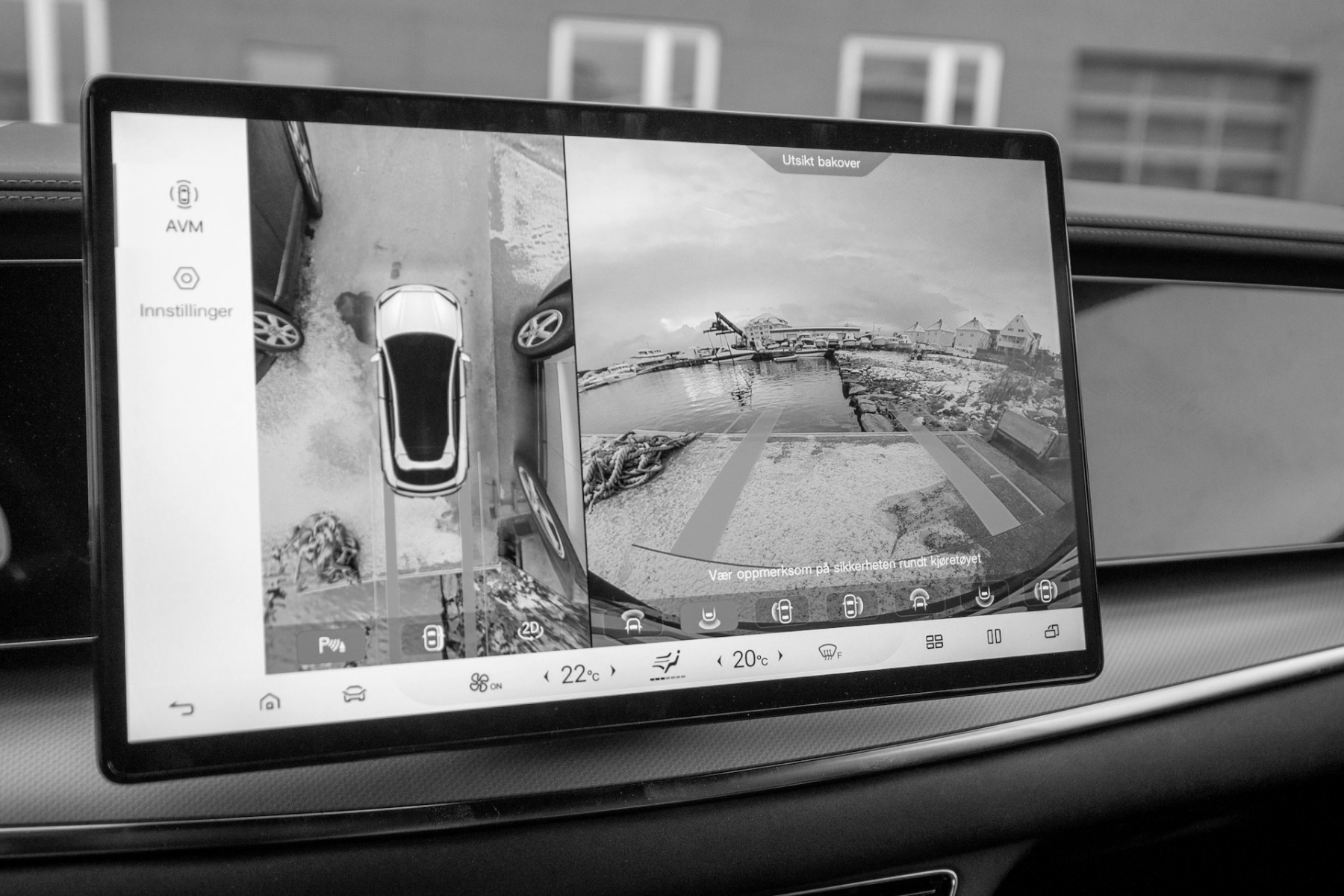
    AR dashboards contextualize and overlay critical information to help you spot traffic signs, stay in your lane, merge into traffic and perform complex maneuvers. As a parking companion, augmented reality can assist you when backing up your vehicle in tight spots more easily — a beneficial feature when driving in cities like San Francisco, with its small, hilly streets, or Washington, D.C., with its confusing roads. 

    1. Basic Maintenance

    Augmented reality systems demystify diagnostics with warning light explanations, turn owner’s manuals interactive and provide step-by-step instructions for basic car maintenance tasks. They can connect you to a remote expert who can assist in troubleshooting and provide audio annotations using live data pulled from sensors and car systems.

    Futuristic Augmented Reality Dashboard Capabilities to Expect

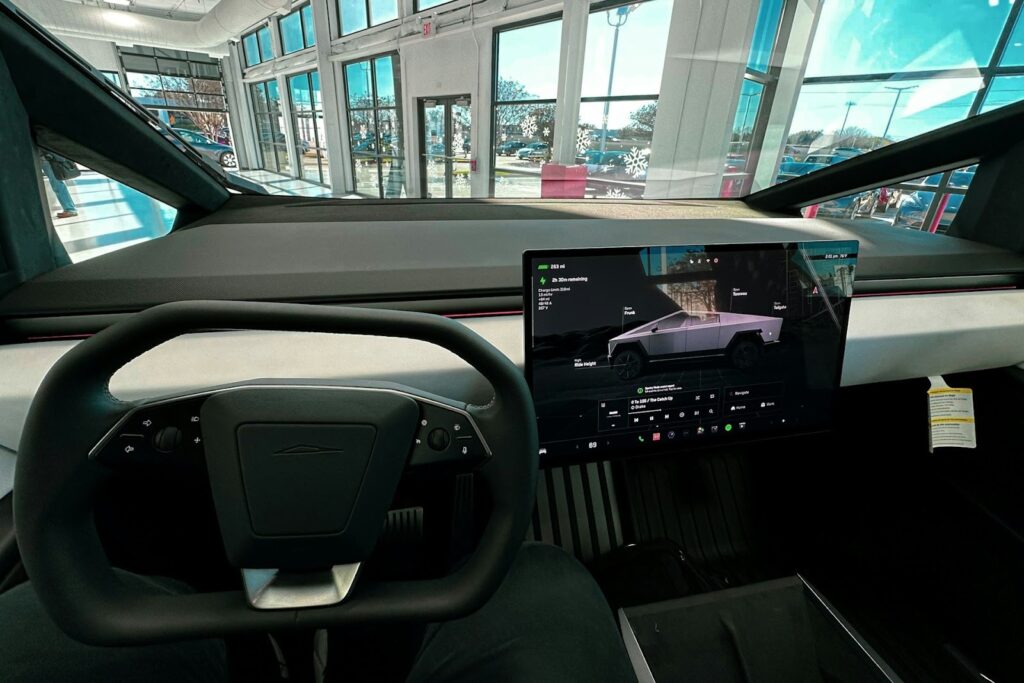
    Cybertruck dashboard

    The functionality and automotive use cases of an augmented reality dashboard should expand as other emerging technologies mature.

    The advent of connected cars will flood AR systems with more data and let them stream richer real-time information about traffic, hazards and more. HUDs will be the artificial intelligence predictive analytics software’s projector, displaying forecasted road conditions.

    Future AR dashboards can overlay more contextual information about landmarks and other points of interest as you pass them by. Interactive controls will enhance infotainment experiences for all passengers, making them more immersive. Holographic windshields can display panoramic content that appears different to every viewer inside the car without distracting the driver.

    Tomorrow’s Augmented Reality Dashboards Are Here

    AR capabilities in cars seem futuristic because you can mostly find them in luxury vehicles. Eventually, they’ll be ready for prime time sooner or later. Once they go mainstream, the public will realize that a new age in motoring has arrived.

  • What Makes Mercedes’ “Magic Sky Control” Magic?

    What Makes Mercedes’ “Magic Sky Control” Magic?

    Luxury is all around you in a Mercedes-Benz, even when you look above your head. The German automaker introduced Magic Sky Control over a decade ago, and the feature has enhanced the driving experience. Here’s a guide to one of the manufacturer’s most innovative functions.  

    What Is Magic Sky Control?

    Magic Sky Control is an electronically controlled glass roof system that allows drivers to adjust transparency levels. Experts say Mercedes-Benz was the first manufacturer to implement this type of customizable sunroof. The manufacturer implemented it for models like the S-Class and the SLC. You could also see it on Maybach models. 

    How Does Mercedes-Benz Make It Work? 

    Mercedes-Benz grill

    This switchable glass roof leverages suspended particle device (SPD) technology. This innovation can block most visible light and outperforms typical windshield materials. Each sunroof contains layered glass with microscopic particles suspended in liquid. This clear fluid evenly distributes the particles between the glass layers, ensuring quick alignment and scattering when the driver pushes the button. 

    The Benefits of Magic Sky Control 

    Luxury buyers want comfort and customization from their vehicle’s automotive technologies. Here are five benefits of Magic Sky Control for Mercedes-Benz drivers. 

    1. Cabin Comfort

    Work commuting or road tripping could mean sitting in your car for hours. So, the last thing you want is to feel uncomfortable while driving. Magic Sky Control allows Mercedes-Benz drivers to adjust their sunroof with a single button press. You can block sunlight on the brightest days and make the interior more comfortable. 

    2. Energy Efficiency

    SPD technology helps drivers block the solar heat gain entering their vehicles. This feature is beneficial when the dog days of summer arrive. Increased energy efficiency means you can rely less on the air conditioner and save fuel. If you drive an electric Mercedes-Benz, you save battery power on your trip. Electric vehicles need up to 10 hours on a level 2 charger, so it’s helpful for commuters. 

    3. Customization

    Magic Sky Control lets Mercedes-Benz drivers control the ambience of their cabin. On sunny days, you can open the sunroof to increase fresh air and natural light. Alternatively, drivers may close it to create a more intimate and cozy atmosphere. Regardless, the technology can go hand in hand with LED lighting systems to make the interior more immersive.

    4. UV Protection

    High ultraviolet (UV) levels can be dangerous, even when you’re inside a car. The SPD smart glass blocks light when drivers turn off Magic Sky Control, which limits the amount of natural light in the cabin. Protection is essential because UV light can cause premature aging and increase the risk of skin cancer. The Mercedes-Benz feature also safeguards interior materials, such as leather. 

    5. Heightened Privacy

    Traditional sunroofs need mechanical shades or blinds to give drivers privacy. These components could block the view and be cumbersome to install. Mercedes-Benz’s electronic roof system provides instant privacy by pressing a single button. Drivers benefit from deep tints, whether driving in their neighborhood or in the city. You save room and make the cabin cleaner by leaving behind physical shades.  

    The Influence of Magic Sky Control 

    Mercedes-Benz unveiled its SPD technology in the early 2010s, and manufacturers have since followed suit. Porsche, a rival to Mercedes-Benz, offers a panoramic roof with variable light control. BMW drivers enjoy an electrochromic glass roof that improves acoustics and UV protection in their iX SUVs. Other manufacturers with electronic sunroofs include Hyundai, Cadillac and Lexus.

    The Future of Electronic Roof Technologies

    Mercedes-Benz owners and other drivers can look forward to new technologies and innovations. For instance, industry experts unveiled black SPD smart glass at CES 2025 in January. This innovation enhances thermal comfort while improving visibility for drivers. You can also expect AI integration and automation, with sunroofs understanding weather forecasts. 

    The Magic of Mercedes-Benz Sunroofs

    Magic Sky Control is a testament to innovation, comfort and luxury. Mercedes-Benz pioneered SPD smart glass in sunroofs and has redefined the in-cabin experience. Now, drivers can control interior lighting and optimize comfort on every trip. The feature has inspired manufacturers to implement similar technologies, with more innovations on the horizon. 

  • What’s the EV Forecast Over the Next Five Years?

    What’s the EV Forecast Over the Next Five Years?

    The past five years have been momentous for the electric vehicle (EV) industry. It bucked the trend and overcame pandemic-related disruptions to post record sales at the beginning of the 2020s. The first half of the decade witnessed the United States passing the Inflation Reduction Act, BYD taking global market leadership from Tesla, Norway leading the world in EV adoption and the rollout of numerous innovations, like megawatt charging stations.

    Can the industry outdo itself over the next five years? Discover five events that will reshape electric mobility in this EV forecast.

    1. Advanced Driver Assistance Systems (ADAS) Will Soar

    According to McKinsey’s annual mobility survey published in April 2025, consumers consider ADAS as a premium auto brand differentiator in 10 years. This sentiment reflects the motoring public’s growing fascination with partial driving automation.

    Although Chinese premium EV owners regard ADAS more highly than their American and European counterparts, this feature may become a unique selling proposition that outweighs brand prestige, powertrain technology, exterior and interior design, and value stability by the turn of the decade.

    1. Fast-Charging Infrastructure Will Spread Nationwide
    Light green EV

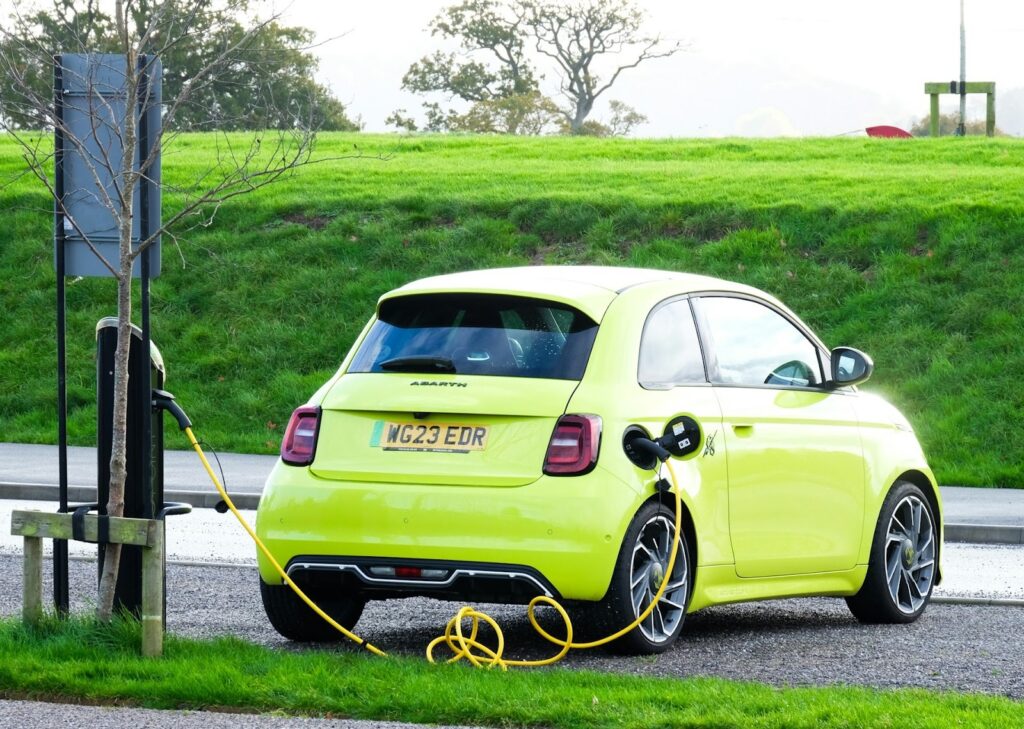
    After exceeding its EV sales share goal for 2025, China is setting its sights on charging infrastructure development. It aims to have full coverage in urban areas and on highways and expanded coverage in rural areas by 2030. The country’s past performance suggests that this target is achievable, given that it already has over 85% of its fast chargers in place.

    Meanwhile, the size of Europe’s fast-charging network has grown in line with the number of EVs on the road. Although the U.S. hasn’t been as rapid, EV forecasters expect the country to have over 500,000 public charging points before the next decade begins.

    1. Solid-State Batteries Will Be More Pervasive

    Solid-state batteries are the holy grail, as they theoretically outperform lithium-ion ones in energy density, charging speed and safety. However, many manufacturers are still racing to scale up the technology’s mass production. According to Grand View Research’s EV forecast, advancements in solid-state battery technology will help drive the global EV market size to reach $ 1,595.75 billion by 2030.

    Leading the charge is Mercedes, which took an EQS equipped with a lithium-metal solid-state battery for a spin in February 2025. MG Motor announced in August that its MG4 was the first mass-produced vehicle with a semi-solid-state battery. Toyota will launch its own version in 2027, while CATL’s and BYD’s solid-state batteries are in development and could be ready for prime time in the same year.

    1. Battery Pack Prices Will Continue to Drop

    High battery prices had been a barrier to EV adoption. They’d inflated sticker prices and repair costs. Fortunately, the average cost of battery packs has been declining primarily due to the falling prices of metals, particularly lithium and cobalt. A significant portion of EV battery prices stems from these commodities.

    In 2022, the average cost of battery prices dropped to $153 per kilowatt-hour — about 90% lower than in the mid-2000s. After falling sharply in 2024, industry observers note that the downward trend will persist until 2030.

    1. U.S. Stricter Emissions Rules Will Push EV Adoption

    In 2024, the U.S. Environmental Protection Agency finalized new tailpipe emissions rules for light-, medium-, and heavy-duty vehicles, applying to model years 2027 through 2032. More stringent regulations aim to compel automakers to build more eco-friendly cars and drive EV adoption and ultimately achieve the country’s sustainability targets.

    Unfortunately, the American government eased its original requirements and adopted a more technology-neutral and performance-based approach after receiving backlash from the industry. Environmental advocates complained that the rules could be tougher, while the auto interests said that they’re still too strict. Regardless, the new standards moderated the initial EV adoption forecasts and greenhouse emissions reduction projections.

    The Near-Term EV Forecast Is Favorable for Motorists 

    The EV landscape is changing rapidly in real time. Despite prevailing and emerging challenges, the industry is heading in the right direction. Growing interest in Level 2 automation, expanding public charging networks, impending rollouts of solid-state batteries, falling battery pack prices and mounting pressure to go electric should make the next five years exciting for EV enthusiasts.

  • This is What the AI Car of the Future Will Look Like

    This is What the AI Car of the Future Will Look Like

    As we accelerate into the future, AI cars are transforming from a sci-fi fantasy into a tangible reality. Rapid technological advances are reshaping the automotive industry, sparking interest in autonomous vehicles. These innovations promise to improve safety, efficiency and convenience for car owners and society alike. However, for some, the idea of an AI car may still seem strange or even somewhat alien, raising questions about trust and the role of technology in our daily lives.

    Beyond Self-Driving — A New Automotive Reality

    An “AI car” means much more than just its self-driving capabilities — it’s a revolutionary shift in how we interact with our vehicles. Imagine a car that drives itself and also functions as a co-pilot, with real-time navigation and safety alerts. You’ll also have a built-in mechanic on board, diagnosing issues before they become problems and scheduling maintenance seamlessly. 

    Additionally, your personal assistant will always accompany you as your AI vehicle manages your calendar, plays your favorite music on request and even orders your morning coffee on the way to the office. As we explore this new automotive reality, we’ll consider the design, functionality and overall experience of these intelligent machines.

    Embracing the Unusual — Why Future Cars Might Seem Alien

    As you envision the future of AI vehicle design, you’ll likely have to embrace the “foreign” concept it brings along. Just as the past’s extreme designs have sometimes pushed the boundaries of convention, future AI vehicles may appear as equally alien. 

    Consider what people thought in the 1950s when Buick unveiled its 1956 Centurion, complete with a rearview camera system instead of mirrors — or BMW’s GINA from around 2010 — a car with an elastic fabric exterior skin. Imagine how people reacted to these and other concept cars that were often ahead of their time and, let’s face it, too weird for mass production in their eras. In a similar vein, the likely unconventional shapes and innovative functionalities that AI cars will offer in the future will challenge many perceptions of what a vehicle should be.

    Core Technologies Driving the AI Revolution

    Several groundbreaking technologies underpin the future of AI cars, promising to redefine your driving experience. These innovations should enhance safety and efficiency, while creating a more personalized transportation experience for passengers.

    1. Full Autonomy — The End of the Driver’s Seat

    Level 5 autonomy, or full automation, represents the pinnacle of self-driving technology, where vehicles operate without requiring your intervention as the “driver.” In this scenario, passengers can relax, work or even socialize while the car makes decisions in real time while navigating through traffic. The shift to full automation will fundamentally change your relationship with driving, transforming your vehicle into a mobile living space instead of a mere transportation tool.

    2. V2X Communication — When Your Car Talks to the World

    Vehicle-to-Everything (V2X) communication enables cars to interact with other vehicles, infrastructure and even pedestrians. With V2X, your car can share information about road conditions, traffic signals and potential hazards ahead with practically anybody or anything. Imagine a world where your car alerts you to a pedestrian crossing or communicates with traffic lights to optimize your route. Theoretically, V2X will significantly improve overall travel efficiency and reduce accidents.

    3. Predictive AI — Your Car Knows You Better Than You Know Yourself

    Predictive AI takes personalization to the next level by learning from your habits and preferences. It can adjust your cabin settings — such as temperature and music — based on your mood or the time of day. This technology also anticipates your vehicle’s maintenance needs, alerting you before a part fails, for seamless and safer commutes.

    What Will AI Cars Actually Look Like?

    Your future AI car’s aesthetics will likely reflect a blend of futuristic design and functionality. Expect aerodynamic pods that enhance fuel efficiency, minimize drag and maximize road performance, with modular designs emerging to adapt for specific work or leisure purposes. 

    Traditional vehicle elements, such as side mirrors and large grilles, could phase out, replaced by sleek surfaces that incorporate advanced sensors and cameras. As AI technology advances, your car’s function will dictate its form, prioritizing safety and connectivity to join the visually striking and innovative automotive landscape.

    The Road Ahead for the AI Car

    With the widespread adoption of AI cars fast approaching, significant societal shifts, such as building public trust and establishing clear regulations, are required. Road infrastructure must evolve to support these advanced vehicles, ensuring safety and efficiency. People also need to adjust to being driven rather than driving. 

    Despite these challenges, you’ll likely be part of a significant transformation in the relationship between car owners and their personal transportation. As AI cars integrate into society, expect a redefinition of the link between mobility and everyday driving.

  • How Can AI Affect a Car’s Wheels?

    How Can AI Affect a Car’s Wheels?

    Imagine your car’s wheels not just spinning, but thinking: choosing their own optimal shape, material and even alignment in real time. Welcome to a world where AI wheels aren’t just visuals, they’re performance hardware and yes, they’re rolling toward you now.

    Why Wheels Matter in the AI Era 

    Before diving into the high-tech stuff, it’s worth remembering that wheels are the backbone of a car’s performance. They determine handling, comfort, aerodynamics and even fuel efficiency. However, despite being a vital component, wheel innovation has remained relatively unchanged for decades, until now. 

    As artificial intelligence begins reshaping every corner of the automotive world, even your wheels are getting smarter. To understand the scale of this transformation, just look at the gaming industry, where experts predict the generative AI market will surge from USD 922 million to over USD 7.1 billion by 2032. AI wheels can analyze data, adjust to conditions and help designers rethink what’s physically possible, turning an ordinary set of rims into adaptive performance tech.

    AI in Wheel Design From Generative Concepts to Bespoke Manufacturing 

    Photo of a blue car with a focus on its wheel

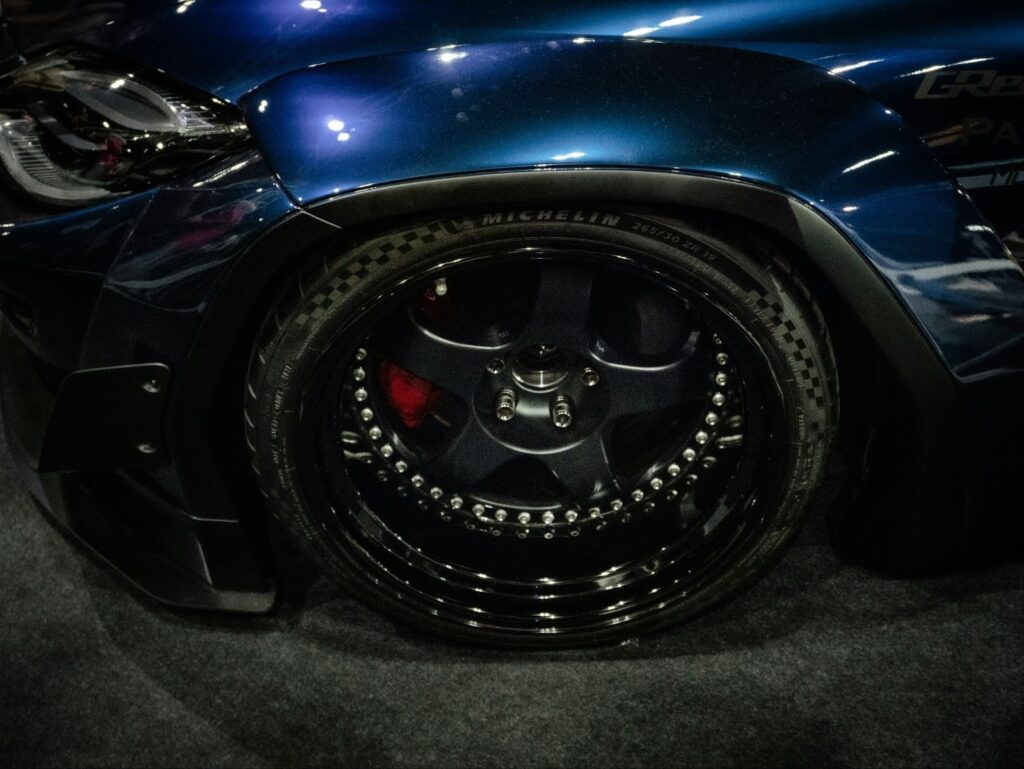
    AI is already revolutionizing the design of car wheels. Generative-design algorithms can now create thousands of wheel variations based on performance goals like strength, weight or airflow. Designers simply set the parameters and the AI produces unique patterns, often resembling futuristic sculptures more than traditional rims.

    A great example is the DeepWheel research project, which used AI to generate a vast dataset of realistic 3D wheel models for performance testing. Meanwhile, custom brands like Hodoor World are experimenting with AI-generated forged wheels, allowing customers to visualize and order tailor-made designs that were previously impossible.

    Best practice is to always pair AI creativity with real-world simulation and safety validation. Even the most beautiful model needs to meet structural standards before it hits the road.

    AI in Wheel Manufacturing and Materials Optimization 

    Beyond design, AI is revolutionizing the manufacturing process of wheels. Machine-learning systems are analyzing alloys and composites to find the perfect balance of lightness and durability, while predictive algorithms help manufacturers minimize defects and material waste.

    Some companies are already utilizing AI to design custom wheels with enhanced aerodynamics and stiffness, thereby improving performance without adding weight. These tools can even monitor manufacturing conditions in real time, flagging micro-imperfections before they cause quality issues.

    Best practice would be to integrate AI-driven design with automated quality control. When sensors, data analytics and human oversight work together, the result is a stronger, smarter wheel ready for modern vehicles and high-speed environments.

    Smart Wheel Systems — Sensors, Self-Adjusting Alignment and Predictive Maintenance 

    Today’s AI doesn’t stop at design. In fact, it’s creeping into the wheel hub itself. Smart wheels equipped with sensors can now track temperature, vibration, tyre pressure and wear patterns in real time. When connected to an AI system, that data translates into early maintenance alerts, dynamic alignment adjustments and even on-the-fly performance tuning.

    For instance, AI-powered customization combines visualization with functional insights, helping drivers and manufacturers predict how a wheel will perform long before it hits the road. In the near future, expect AI to adjust camber and toe angles automatically, responding to terrain or driver behavior.

    Best practiceis to treat your AI wheels like any other smart device — secure their data, run regular calibrations and ensure software updates are part of your maintenance routine.

    Visualization, Aftermarket and Consumer Experience 

    The aftermarket world is getting a digital glow-up, too. Thanks to AI visualisation tools, car enthusiasts can now “test-fit” different wheel styles virtually, swapping finishes, sizes and offsets in real time. 

    Manufacturers and tuners benefit just as much as AI speeds up prototyping, reduces material waste and gets new designs to market faster. Customisation is no longer just about looks; it’s about precision and performance tailored to you.

    Best practicewould be to always follow virtual design sessions with physical test fitting to confirm load ratings and clearance before installation.

    Challenges, Risks and What’s Next 

    Motherboard with a chip in the middle showing the text "AI"

    As exciting as AI wheels sound, there are real hurdles to overcome. Regulatory approval, safety testing and manufacturing costs still lag behind the technology’s potential. Over-reliance on AI design without human oversight can also lead to unexpected structural flaws or data bias.

    Still, the road ahead looks promising. In autonomous and EV applications, AI-integrated wheels could adjust aerodynamics, communicate with braking systems and even generate power through kinetic feedback. It’s a future where your car’s wheels won’t just spin, they’ll think.

    Best practice would be to keep humans in the loop. AI enhances engineering brilliance rather than simply replacing it. 

    Rolling Into the Future

    AI is transforming wheels from passive metal circles into dynamic, data-driven performance assets. Whether in design, manufacturing or smart systems, AI wheels are set to make every turn smarter, smoother and more customized than ever before.

  • What Is It Going to Be Like to Live in Toyota’s Woven City?

    What Is It Going to Be Like to Live in Toyota’s Woven City?

    The future of cities is one of the most exciting and critical challenges facing us today, with innovations such as smart homes and autonomous cars already underway. However, what if these technologies aren’t separate, but integrated into a single city built from scratch? 

    That’s what’s happening in Toyota’s Woven City. Located at the base of Mt. Fuji, it serves as a real-world test course and urban environment for developing and testing future mobility technologies. What would it be like to live in such a futuristic city?

    A “Living Laboratory” for the Future

    Photo of a city at night

    Residents and visitors of the Woven City can collaborate and experience new ways of living and moving within its boundaries. It has areas for everything from autonomous vehicles to smart homes and robotics.

    The Woven City is not a fantasy, but a research and development initiative. Toyota unveiled its plans to build a prototype city on a 175-acre site in Japan at the 2020 Consumer Electronics Show. It set the stage for the automotive titan’s ambitious goals — to create a place where researchers, engineers and scientists can develop technologies in a real-world environment.  

    Akio Toyoda, President of Toyota Motor Corporation, stated that the city welcomes all those who wish to improve the way people live in the future. 

    A Glimpse Into Daily Life in Toyota’s Woven City

    Here’s what the day-to-day life of the city’s future residents may look like based on the initiative’s focus and setup. 

    A Connected, Sustainable Sanctuary

    Homes in the city blend tradition and technology. Developers typically build most residential spaces with wood and employ traditional Japanese joining techniques for construction. Robots help humans have more time by taking care of everyday tasks, such as taking out the trash and performing other chores. 

    Homes may also have AI-powered sensors. These devices track the residents’ health and well-being and automatically adjust home systems based on their findings. 

    A “Woven” Grid Designed for People and Mobility

    Toyota’s Woven City also has a unique street grid as its core organization structure. It’s designed by Bjarke Ingels Group (BIG) and includes three types of streets: 

    • Primary streets for high-speed traffic: These are reserved exclusively for autonomous, zero-emission vehicles, including those used for transportation and deliveries.
    • Shared streets for personal mobility: These mixed-use streets are for lower-speed transportation like scooters, bicycles and other personal mobility devices. Pedestrians can also use them. 
    • Linear park or promenade streets: Only pedestrians can use these streets, which are filled with greenery and designed for leisure, social interaction and connecting with nature. 

    The city will also have a network of underground streets for logistics. These will separate waste disposal and automated deliveries from the pedestrians and automated vehicles on the surface. 

    The Technology Powering the City

    The Woven City is Toyota’s answer to the massive shifts in its sector. The automotive industry has undergone the most significant developments over the past century, from electric and autonomous cars to advancements in AI, connectivity and sustainability. The company applied many of them in the city. 

    Solar panels on rooftops and green hydrogen fuel cells power the Woven City, making it a fully sustainable community. The city also has a a virtual replica created from real-world data. This gives inventors, researchers and other parties a simulation platform to model scenarios, test technologies and optimize systems before actual implementation. 

    The Future Is Starting: Phase 1 Complete

    Toyota completed the first phase of construction in October 2024, which includes a test course for mobility, where many of the initial trials will take place. The company is preparing to launch some of these trials, and some operations set to begin the following year. 

    In late September 2025, the Woven City opened its first section. Around 300 people will live on-site during the first phase, including Toyota employees and their families. The population may increase to about 2,000 as the project develops. 

    The Beginnings of a Blueprint for the Future

    Toyota’s Woven City is more than just a tech showcase. It’s a human-centric experiment that has the potential to redefine the future. With its setup, the world can proactively design a better way of living, rather than just reacting to change. The project’s impact will also extend beyond the automotive industry. It’s a tangible, working model of a future that is actively being built today.