
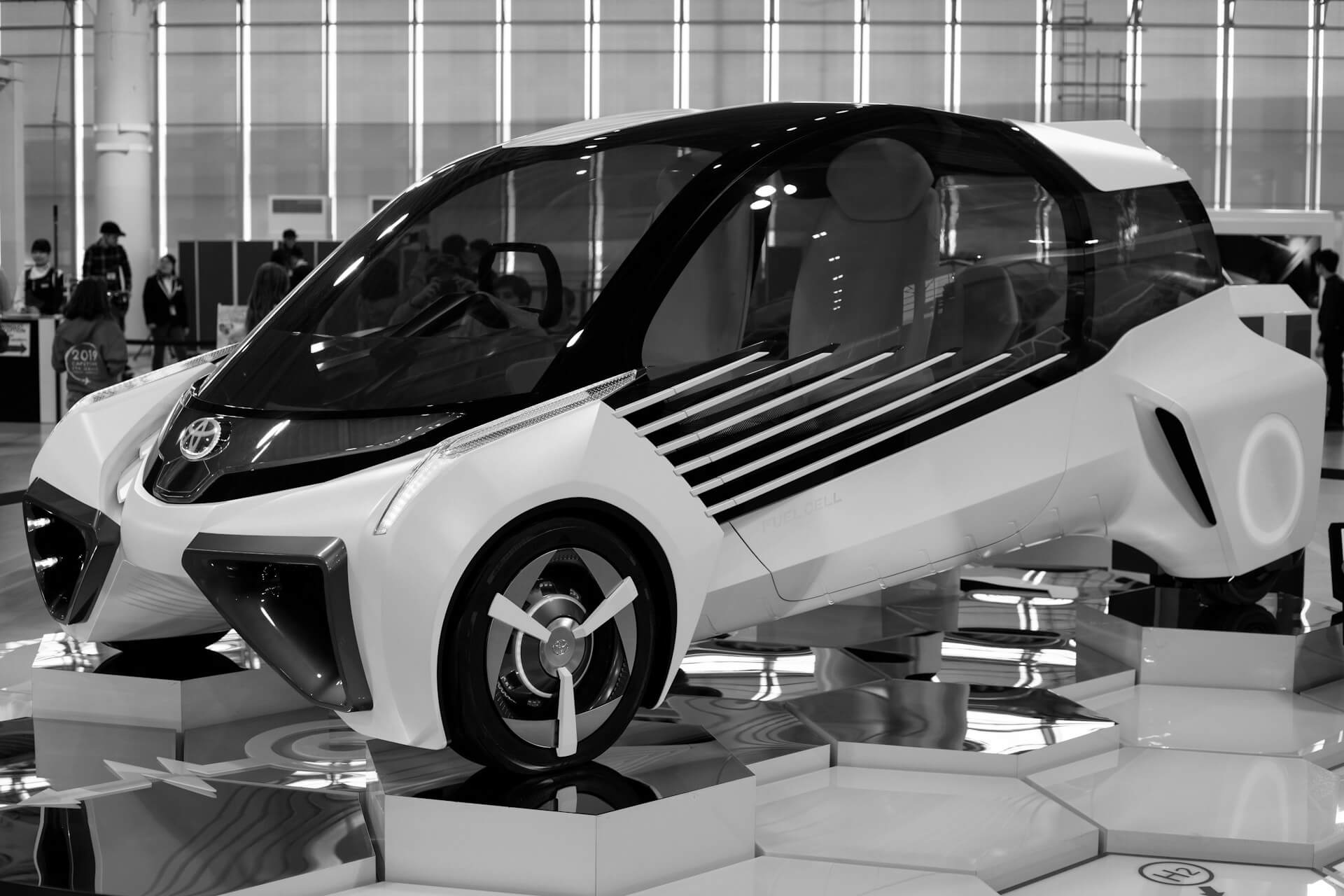
Innovation in transportation has been nonstop since the days of horses and buggies. The economic incentives of reducing commute time, preventing accidents and streamlining fulfillment incentivize ingenuity, giving birth to future mobility concepts. Additionally, climate change has accelerated the adoption of electrification. Where will society go from here? These five concepts provide a glimpse of the future of mobility.
- Vehicle to Everything (V2X)
V2X enables automobiles to communicate with each other, road infrastructure elements, pedestrians, network services and connected devices. It has a long list of use cases, including reducing the risk of collision, optimizing traffic flow and accessing smart home systems.
This technology has been under discussion for a long time, and it’s finally ripe for mainstream adoption. In 2024, Volkwasgen launched a suite of V2X capabilities, like notifying oncoming vehicles when the car is disabled and receiving warnings of potential hazards ahead.
- Autonomous Driving
Sam Abuelsamid, an automotive leader and vice president of market research at Telemetry, projects that over 16 million Level 4 automobiles will enter the market annually, which means that fully self-driving vehicles may not become a reality until at least the second half of the next decade.
Nevertheless, the futuristic concept of fully automated driving is on the horizon. The full-scale deployment of Level 5 vehicles will empower the transportation industry’s workforce, creating new opportunities for drivers to transition into remote operators or provide customer support.
- Floating Warehouses

Amazon and Walmart are in a race to realize aerial fulfillment centers. The two applied for patents for aircraft meant to hover above population centers, house inventory and provide launching bays for delivery drones.
These retail giants have been quiet about any updates on their floating warehouses for years. If and when the infrastructure is ready, expect to receive your orders within minutes.
- Urban Air Mobility
The value proposition of air taxis is clear — they avoid ground congestion and help people reach their destination more quickly. The leading concept for urban air mobility involves electric vertical takeoff and landing aircraft, which operate like helicopters but with multiple electric rotors.
The operational frameworks for urban air mobility in various countries are at different stages of development. Integrating the aircraft with the existing infrastructure and learning to navigate complex air traffic in built environments are also unsolved challenges. One of the frontrunners is the United Arab Emirates, which conducted real-world simulations and pilot tests in 2025 to create a blueprint other nations can emulate.
- Hyperloop
The theoretical hyperloop system uses magnetic levitation and propulsion to enable pods to travel through a near-vacuum environment inside a network of low-pressure tubes. Elon Musk proposed this mobility concept in 2013 and published a white paper for public consumption, allowing universities and transportation companies to build on the idea.
The technology remains experimental. Although the hyperloop hasn’t been commercially viable due to its cost and complexity, among other factors, many haven’t given up on it. In 2024, a Swiss consortium constructed a 1/12-scale model and a circular test track to validate its feasibility. The team’s hyperloop system traveled 7.3 miles at a speed of 25.3 mph, translating to a journey from San Francisco to Sacramento, California, at speeds of up to 303.4 mph.
A New Blueprint for Mobility
Many of these innovative mobility concepts are likely to emerge in the future, and some are already present in various forms. Only time will tell when all of them materialize as envisioned, but you can bet the experts behind them are working tirelessly to make them work sooner rather than later.